A concept site for a fictional painting company
Concept website — fictional business; not a client result
To show what the work looks like, I designed and built a one-page concept for Linden & Slate Painting, a company that does not exist: the layout, the words and the inquiry path.
Opens the working page. Its quote form is a demonstration and sends nothing.

What the layout is for
What each decision on the page is for. The concept has never been live, so there are no outcomes to report.
- 01
The first screen does the whole job
It says what the company does, roughly where, and how to ask for a quote, before anything else.
- 02
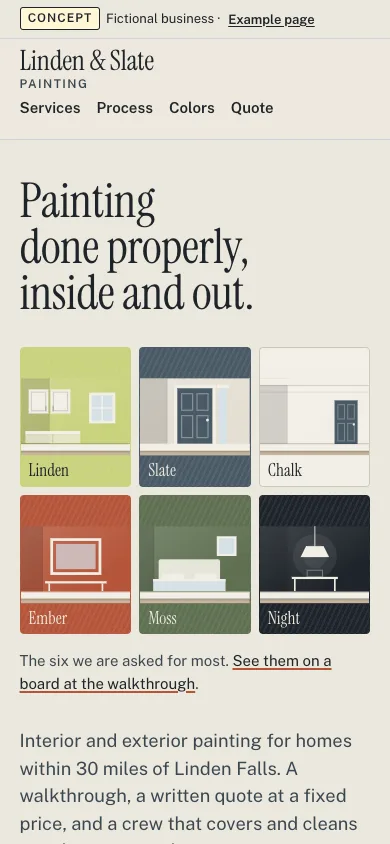
Color comes first, named and drawn
Six named cards up top, each one on a drawn wall further down, then the finishes. Nothing stands in for photographs of real work; a client site would carry their own.
- 03
Each service in plain words
What is included and how long it usually takes, so a homeowner can tell whether it fits before asking.
- 04
Four steps, nothing hidden
The process is spelled out so the visitor knows what a walkthrough and a written quote involve.
- 05
A short ask where the page ends
The quote request asks for little, explains what happens next, and sits where the page naturally ends.
- 06
Phone-first
Large touch targets, the colors within the first screen, and no step that depends on hovering.
The first screen, and the form after the demo
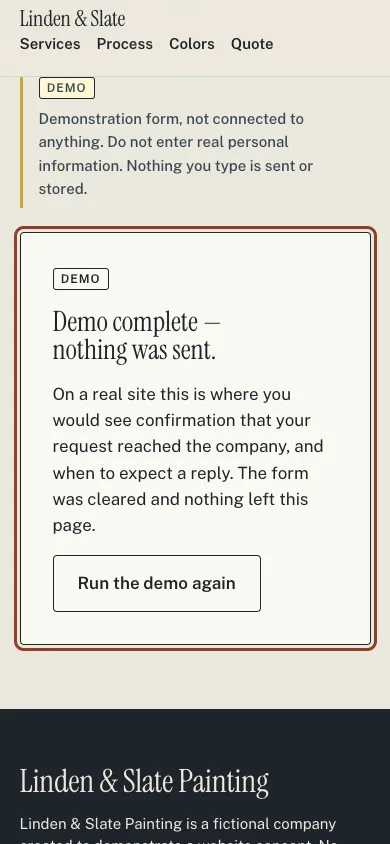
Captured at 390 pixels wide. The colours stay within the first screen, and the quote form says plainly that nothing was sent, because nothing is.
What this example does not show
- Results. The concept has never run, so there are no inquiries, rankings, or revenue to report, and none are implied.
- Reviews, ratings, certifications, or badges. None are shown because none exist for a fictional company.
- An address, phone number, or email. A real client site would carry the client's own verified details.
- Photographs of finished work. The pictures on the concept are licensed illustrations of the trade, labelled as such on the page; a real site would use the client's own photos of their own jobs, never a borrowed picture presented as their work.
How your site would differ
The concept is one page. The initial build for a client is a simple site with a home page, a page for each advertised service (up to two), an about page, and a contact page with a tested inquiry form, all carrying your own details and photos of your own work.
Which platform it runs on is decided before building. Portability depends on the platform we choose together. A site on a managed builder moves differently from a custom-coded site. I will explain the transfer terms of the chosen platform before we build, rather than promise a frictionless move.
See what the initial setup includes